
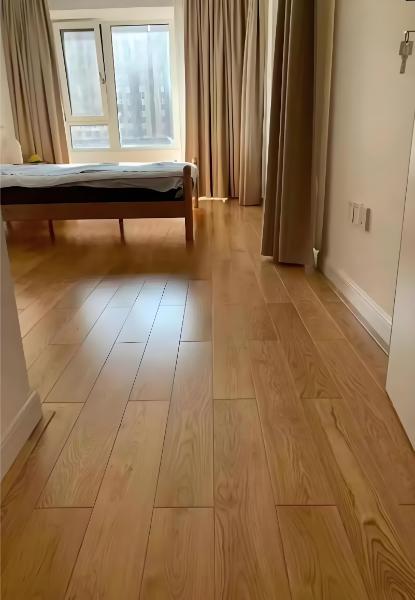
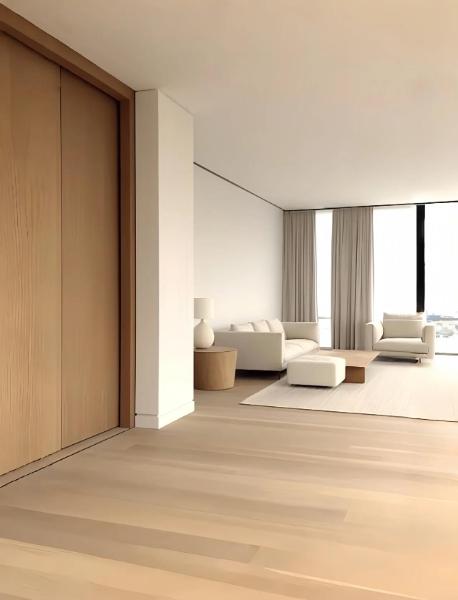
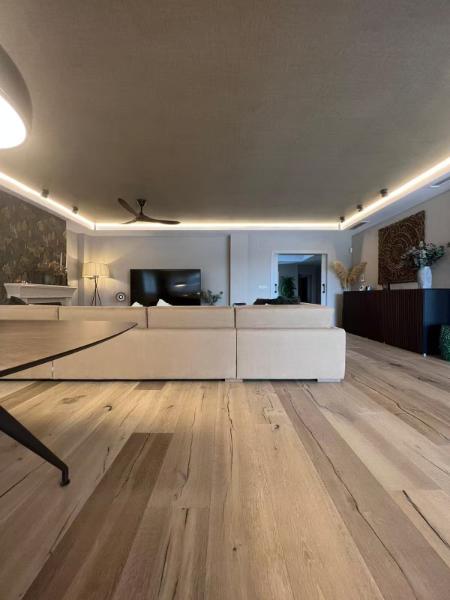
Why Oak Engineered Wood Flooring Is the Smart Choice for Every Room (Yes, Even Kitchens)

What makes oak engineered different?
Solid oak is a single piece of wood. In a damp basement or a kitchen with occasional spills, it will cup, crown, or gap. Oak engineered wood flooring solves this with a multi-layer core (usually plywood or HDF) topped with a genuine oak veneer.
Why oak specifically?
Oak — whether red or white — offers an ideal balance of hardness and workability. Red oak (Janka 1,290) handles busy family rooms. White oak (Janka 1,360) adds extra water resistance, making it suitable for mudrooms and powder baths.
Best rooms for oak engineered wood flooring
-
Kitchens – The cross-ply construction resists swelling from wet mops or dropped ice cubes.
-
Basements – Install over concrete with a vapor barrier — solid oak cannot go below grade.
-
Living rooms – The natural grain hides dust and scratches better than maple or cherry.
-
Over radiant heat – Oak engineered planks transfer warmth without cracking.
Browse our collection of oak engineered wood flooring — available in raw, pre-finished, and hand-scraped textures.